

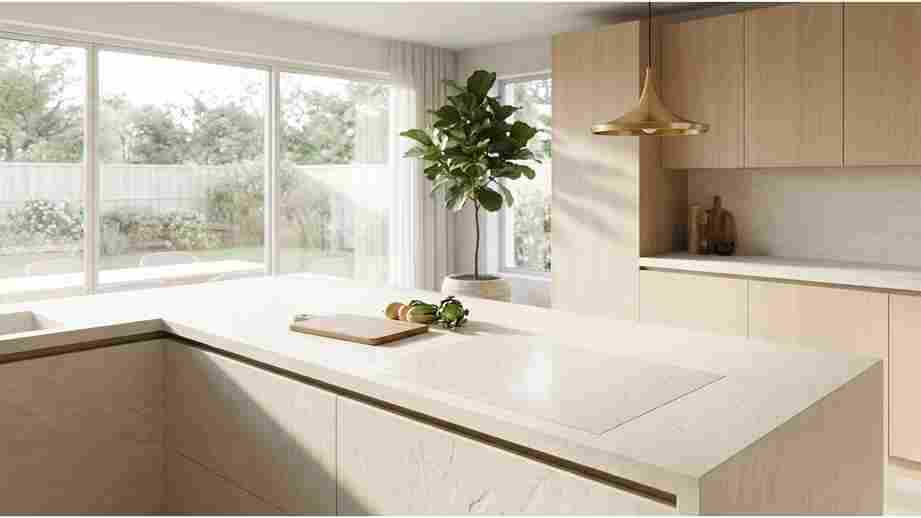
Is Laminam Porcelain Countertop Durable? The Secret to Cracking and the Facts
The first thing that bothers those embarking on a kitchen renovation is always the same question. “Master, I heard these porcelains break, is that true?” As a master who has spent 17 years at the construction site, at the stone cutting bench, let me not beat around the bush: No, properly installed stone does not break. Behind those complaints you see on the internet or forums like “My Laminam countertop cracked” or “The corner broke off immediately” lies not the poor quality of the material, but the shoddy substructure built by the craftsman. There’s a lot of talk in the market about Laminam porcelain countertops. But what’s the real story, why does this Italian stone crack or not crack? Let me explain it to you in plain workshop language.
Does Porcelain Countertop Break? The Reality on the Construction Site
When Laminam is mentioned in the market, everything else stops. Italians really know their stuff. They have a technology they call “12+”; they cover the back of a massive 12mm porcelain slab with a special fiberglass mesh reinforcement. This mesh relieves the internal tension of the stone, increases its flexibility, and makes it shock-absorbing. Its surface hardness is at levels 7-8 on the Mohs scale. Do you know what this means? Even if you lay meat on the stone and chop it with a cleaver without a cutting board, it won’t flinch. You can chop vegetables with a knife, and you won’t even leave a scratch on it.
So, if this stone is so durable, why are people complaining about it “cracking”?
Here’s the situation: Porcelain is a rigid, non-flexible material. If a stone craftsman simply places that massive slab on top of a flimsy wooden-slatted cabinet with an empty space underneath, that stone will eventually crack. As weight is placed on the cabinet, it sags half a millimeter. The stone remains unsupported. The moment you suddenly place a heavy pot on it, the stone, unable to flex, cracks from that unsupported spot. So, the fault is not with the stone, but with the craftsmanship of the installer who left the underside empty. We say the stone won’t move, but only if it’s fully supported underneath!
How Do We Solve This Risk at Ecesoy?
At our workshop, we don’t deal with these flexing issues at all. The solution is simple. When installing a 12mm Italian porcelain kitchen countertop, we fill the entire underside of that large slab not with flexible wooden pieces, but with precisely milled solid natural marble, leaving zero gaps.
When we lay solid marble like a rock under the porcelain, there are no air gaps and no risk of flexing. Even if you accidentally drop something very heavy on the countertop in the kitchen, the impact energy is absorbed by the solid marble in the underlying layer. The risk of breakage drops to zero. This is no joke. Additionally, we cut and join the corner connections at a perfect 45-degree angle using a 5-axis CNC machine in the factory. This leaves no visible joint line and no chipping on the edges.
For Those Tired of Shiny Marbles in the Kitchen: Calce Antracite
Let’s talk a bit about style. For years, we’ve seen the same shiny, eye-straining marbles in every home. Frankly, most of us are fed up with them. Lately, customers coming to our workshop always have the same request: matte and textured surfaces.
This is exactly where the Laminam Calce Antracite model comes in. It has a wonderful matte anthracite color, with a wet plaster, raw cement texture. It doesn’t reflect light, and it’s easy on the eyes. Despite its raw appearance, it features a special NSF food-certified antibacterial surface they call Ambiance. So, don’t let its rough look fool you; it’s non-porous. Whether tomato paste spills, pomegranate juice drips, or even oil splashes… you just wipe it clean with a damp cloth. It neither stains nor harbors bacteria. It creates such harmony with wooden or matte white cabinets that you directly feel that spaciousness when you enter the kitchen.
Advice from the Master: Don’t Take Risks in the Kitchen
In short; when you choose a premium material like Laminam, you’re making a lifelong investment. Laminam countertop prices might seem a bit high compared to classic stones at first, but considering you’ll have peace of mind for a lifetime after one installation, it’s the most rational investment. Just make sure you work with a craftsman who does justice to the stone and provides a solid substructure.
If you’d like to feel the raw, silky matte texture of the Calce Antracite model with your own hands, and see our marble-supported unbreakable substructure system live, we invite you to our workshop, our warehouse in Ataşehir, Istanbul, for a cup of tea. If you can’t visit, please send us the rough measurements of your project via our email at [email protected] or our WhatsApp line at +90 530 935 00 38, and we’ll promptly provide you with a clear and transparent quote. Entrust your kitchen to skilled craftsmen, and have peace of mind.